 EN
EN  ES
ES 

Mail us

Open Hours
Monday-Thursday: 9am–5pm

Call Us
We provide pharmaceutical services including delivery of all medications. Our goal is to make it easy for our patients to maintain treatment compliance in order to prevent the spread of HIV and other illnesses.
We provide comprehensive HIV prevention and treatment services through convenient telehealth visits and coordinated primary care support.
Our team offers:
PrEP (Pre-Exposure Prophylaxis) for HIV prevention
Treatment as Prevention (TasP) is a proven strategy showing that people living with HIV who take ART as prescribed and maintain an undetectable viral load cannot sexually transmit HIV (U=U: Undetectable = Untransmittable).
Whether you are looking to prevent HIV, start treatment, continue your care, or access supportive health services, our team is here to provide compassionate, affirming, and accessible care every step of the way.

Our case managers take the time to truly understand your needs to properly connect you to personalized medical care and support services. The patient navigators can provide immediate linkage to medically necessary and appropriate services.
This is especially true for persons living with HIV/AIDS and other special populations that require immediate care to treatment or prevention.

BMS efforts to serve diverse areas is achieved via participation in health fairs and community activities county-wide.
We provide pharmaceutical services including delivery of all medications. Our goal is to make it easy for our patients to maintain treatment compliance in order to prevent the spread of HIV and other illnesses.
Our PCP’s offer physical examinations, routine screenings, disease management, immunizations, and care coordination.
We take a holistic and patient-centered approach to medicine, fostering long-term relationships with our patients.

We believe in individual expression, identity, and feeling truly comfortable in your body.
For this reason, we will be offering hormone replacement therapy and cosmetic services to Transgender or gender nonconforming patients.
Our case managers take the time to truly understand your needs to properly connect you to personalized medical care and support services. The patient navigators can provide immediate linkage to medically necessary and appropriate services.
This is especially true for persons living with HIV/AIDS and other special populations that require immediate care to treatment or prevention.
BMS efforts to serve diverse areas is achieved via participation in health fairs and community activities county-wide. Venues range from LGBTQ centers, community-based organizations and faith-based institutions to name a few.
On a monthly basis, a Community Outreach calendar of HIV Prevention activities, education groups, workshops and other special events are distributed within our communities via social media as well as on this website. BMS can provide you with multi-language educational brochures and flyers.
AIDS is the final stage of HIV infection, though not everyone who has HIV advances to this stage. People at this stage of HIV infection have badly damaged immune systems, which puts them at risk for opportunistic infections (OIs, or infections that only affect persons with compromised immune systems).
If a person is diagnosed with AIDS, they will need medical intervention and treatment to slow the disease’s progression. Fortunately, current HIV medicines can control the virus so that people living with HIV can live a longer, healthier life and reduce the risk of transmitting HIV to others. Before the introduction of ART in the mid-1990s, people with HIV could progress to AIDS in just a few years. Today, a person who is diagnosed with HIV and treated before the disease advances can have a nearly normal life expectancy.
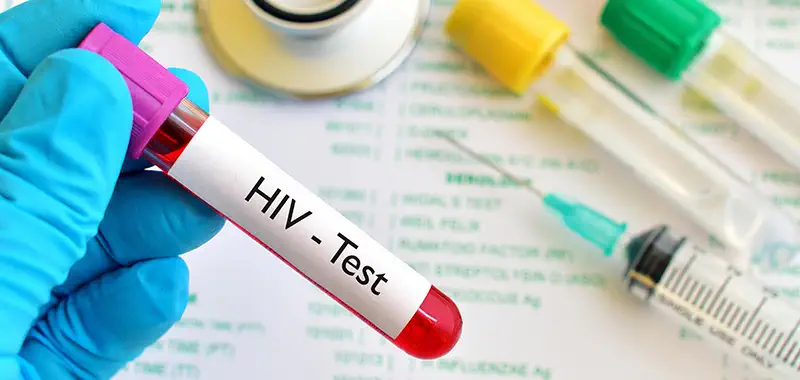
Contact us today to begin PEP treatment. The sooner you begin treatment after exposure the better chance you will not contract HIV. Every hour counts!
In 1987, a drug called AZT became the first approved treatment for HIV infection. Since then, approximately 30 drugs have been approved to treat people living with HIV/AIDS, and more are under development. For individuals living with HIV, these drugs have become life-saving treatments.
Since there is no cure for HIV, a person will have HIV for life, and without the proper medications, HIV can ultimately lead to death. Fortunately, remarkable advances in science and technology mean that HIV is now a chronic manageable disease, so that people who have HIV can lead long, healthy lives if they get proper medical treatment. Current HIV treatments also allow individuals with HIV to drastically reduce their risk of transmitting HIV to others, including sexual partners and, for females, unborn children.
There are now five different classes of HIV drugs, each attacking the virus at different points in its life cycle. People taking HIV medications will generally take three different antiretroviral drugs from two different classes. This regimen, often referred to as Highly Active Antiretroviral Therapy (HAART or ART), is the standard for HIV treatment, and gives individuals with HIV the best opportunity to control the amount of HIV in their body, protect their immune system, and protect against drug resistance.
Taking HIV medications is critical to lowering HIV viral load (the amount of HIV in the body) and increasing CD4 levels (the amount of healthy, immune-boosting cells in the body). Getting and staying on medical treatment is the key to long-term success, and for people living with HIV, achieving overall wellness requires a comprehensive approach.
Currently, there is no cure for Human Immunodeficiency Virus, but scientists and others in the medical field are working diligently to find a cure. Presently available treatments help so that the virus does not develop into AIDS (Acquired Immunodeficiency Virus Syndrome), which is the final stage of the HIV infection. It is important to note that not everyone with HIV develops AIDS.
HIV is caused by a virus that spreads through unprotected sex with a person who has the Human Immunodeficiency Virus. This virus can also spread through contact with the blood of someone who has HIV such as sharing drug needles or blood entering an open wound. Additionally, children can be born with HIV because women can pass the virus on to their babies during pregnancy or childbirth.
It can be difficult to detect HIV, as symptoms are very similar to other illnesses. Those infected may experience flu-like symptoms and notice that they have swollen glands. These symptoms can linger within the first two to four weeks of contracting the HIV. It may take months or years to experience severe symptoms.
The Human Immunodeficiency Virus is typically treated with antiretroviral therapy (ART). These medications work by reducing the amount of the HIV infection in the body, in turn giving the body and immune system a chance to recover. This helps strengthen the immune system to help fight off infections and certain HIV-related cancers. Antiretroviral medications do not cure HIV infection, but it does make it easier to deal with and manage this chronic condition. ART treatment also helps to reduce the risk of spreading HIV to other individuals.
Benevolence Medical Services (BMS) is a community-based healthcare provider offering HIV prevention, HIV treatment, STI testing and treatment, and primary care services through in-person and telehealth visits. Our focus is accessible, affirming, and patient-centered care.
The Center for Disease Control and Prevention (CDC) recommends that everyone between the ages of 13 and 64 gets tested or HIV at least once, and more frequently if they engage in high-risk behaviors. Our PrEP patients are tested every 3 months. We recommend anyone having unprotected sex in South Florida to be tested at least every 3 months or upon experiencing any signs or symptoms. We encourage anyone to return for testing as much as possible depending on their lifestyle.
There are many places to get tested for HIV in Miami, at BMS you can get tested for free at 19533 NW 57th Ave, Suite A, Miami Gardens, FL 33055
No, HIV cannot be transmitted through mosquitoes. The virus is not spread through insect bites.
Although HIV can be transmitted through blood, the risk of transmission through kissing with blood in the mouth is very low. HIV is not present in saliva and would need to infect an open sore or cut for transmission to occur.
No, HIV cannot be transmitted through sharing food or drinks. The virus is not present in saliva and cannot survive outside the body for long.
The risk of HIV transmission through tattoos or piercings is low if proper safety precautions are taken, such as using sterile equipment and ensuring that the artist or piercer follows appropriate infection control procedures.
The risk of HIV transmission through breastfeeding is generally reduced if the mother is on ART. However, there is still a small risk of transmission, and alternative feeding methods should be considered if they are available and safe.
If you believe you have been exposed to HIV, it is important to seek medical attention immediately. PEP is available at our 3 locations, but you must act fast, within 72 hours from the exposure to HIV. The sooner the more effective this prevention strategy will be. Please contact any of our facilities to receive free STI testing and be scheduled with one of our providers for the PEP prescription. We accept most insurances and have a “SELF PAY” rate and Gilead iAssist Patient Assistance Program for PEP if necessary. Once you see the provider, they will prescribe you a 30-day supply of antiretroviral therapy (ART) of which you should take 1 pill a day for at least 28 days and then retest for HIV to ensure you are HIV negative.
If you believe you have been exposed to HIV, seek medical attention as soon as possible. PEP (Post-Exposure Prophylaxis) is an emergency medication that can help prevent HIV infection when started within 72 hours of a possible exposure. It is most effective when started as early as possible.
PEP is available through our providers. Please contact our facility for same-day evaluation, HIV/STI testing, and prompt connection with a provider for PEP initiation.
We accept most insurance plans and offer patient assistance options based on eligibility.
If prescribed, PEP is taken for 28 days as a daily antiretroviral regimen, followed by recommended follow-up HIV testing to confirm your HIV status. After completion, your provider may discuss ongoing prevention options, including PrEP, if appropriate.
The Center for Disease Control and Prevention (CDC) recommends that everyone between the ages of 13 and 64 gets tested or HIV at least once, and more frequently if they engage in high-risk behaviors. Our PrEP patients are tested every 3 months. We recommend anyone having unprotected sex in South Florida to be tested at least every 3 months or upon experiencing any signs or symptoms. We encourage anyone to return for testing as much as possible depending on their lifestyle.
There are many places to get tested for HIV in Miami, at the BMS you can get tested for free at any of the 3 locations: Biscayne, Bayshore and Hialeah.
No, HIV cannot be transmitted through mosquitoes. The virus is not spread through insect bites.
Although HIV can be transmitted through blood, the risk of transmission through kissing with blood in the mouth is very low. HIV is not present in saliva and would need to infect an open sore or cut for transmission to occur.
No, HIV cannot be transmitted through sharing food or drinks. The virus is not present in saliva and cannot survive outside the body for long.
The risk of HIV transmission through tattoos or piercings is low if proper safety precautions are taken, such as using sterile equipment and ensuring that the artist or piercer follows appropriate infection control procedures.
If you believe you have been exposed to HIV, it is important to seek medical attention immediately. PEP is available at our 3 locations, but you must act fast, within 72 hours from the exposure to HIV. The sooner the more effective this prevention strategy will be. Please contact any of our facilities to receive free STI testing and be scheduled with one of our providers for the PEP prescription. We accept most insurances and have a “SELF PAY” rate and Gilead iAssist Patient Assistance Program for PEP if necessary. Once you see the provider, they will prescribe you a 30-day supply of antiretroviral therapy (ART) of which you should take 1 pill a day for at least 28 days and then retest for HIV to ensure you are HIV negative.
The risk of HIV transmission through breastfeeding is greatly reduced if the mother is on ART. However, there is still a small risk of transmission, and alternative feeding methods should be considered if they are available and safe.